
Haskell County Arrest Records and Charges
An arrest record starts with law enforcement. In Haskell County, the official research located the Haskell County Sheriff's Office as the local contact for current custody, booking, release, bond, and jail questions, but no official Haskell County online jail roster or mugshot database was found. That means arrest-side questions should be handled carefully. A person may need to call the Sheriff's Office for current custody facts rather than rely on nonofficial booking sites.
Court charges after arrest begin when the prosecutor files a formal accusation with the court. In rural Kansas counties, the prosecuting office is usually a County Attorney rather than a District Attorney. The research did not confirm a current official Haskell County Attorney officeholder through an accessible official page, so final records work should name the office rather than claim a current person. The prosecutor reviews law-enforcement reports, files complaints or informations, handles diversion and plea issues, and appears in criminal hearings. The full outcome then belongs in the criminal case file.
The jail and custody side is covered separately in Haskell County inmate records, while the complete case outcome is handled in Haskell County criminal court records.
Haskell County Arrest-to-Charge Pathway
The arrest-to-charge pathway is not automatic proof of guilt. An arrest may lead to release without a filed charge, a municipal citation, a district court complaint, a warrant case, a diversion discussion, or a later dismissal. Once a Haskell County court charge is filed, Kansas CaseSearch may show public district case information if the case is not sealed or restricted. Municipal ordinance charges inside Sublette or Satanta may stay with city court channels instead of Haskell County District Court.
- Law enforcement makes an arrest or issues a citation based on the incident and available authority.
- The sheriff or jail side handles booking or custody if the person is held locally.
- The County Attorney or prosecutor reviews reports and decides what charge, if any, should be filed.
- The prosecutor files a complaint or information in the proper court, or a city matter proceeds through municipal court.
- The court record then tracks charge status, hearing dates, plea, disposition, sentence, costs, and later expungement activity if any.
For district charges, start with Kansas CaseSearch and confirm Haskell County, case type, case number, defendant, filing date, and current status. If the charge is tied to a Sublette or Satanta city ordinance matter, contact the city court clerk instead of assuming the district record has the municipal charge.
Court Charges After Arrest
Charging documents are the bridge between an arrest record and a court case. They state the legal accusation that the court will track. The most relevant documents are complaints and informations, and indictment can appear in the broader criminal charging vocabulary. Kansas rural county practice usually centers on prosecutor-filed complaints or informations in district court, while municipal courts use city complaint or citation procedures for ordinance cases.
| Document | Who Files It | What It Usually Shows | Haskell County Context |
|---|---|---|---|
| Complaint | Prosecutor or authorized charging party | Alleged offense, statute or ordinance, defendant, count, filing date, and probable-cause basis when included. | Can start a district criminal case or support municipal proceedings depending on court level. |
| Information | Prosecutor | Formal criminal charges by count, offense name, statute, severity or class, and filing details. | Used in district criminal prosecution after prosecutor review. |
| Indictment | Grand jury | Formal charges returned by a grand jury. | Included as a charging-document type, but Haskell research did not locate a county-specific grand jury example. |
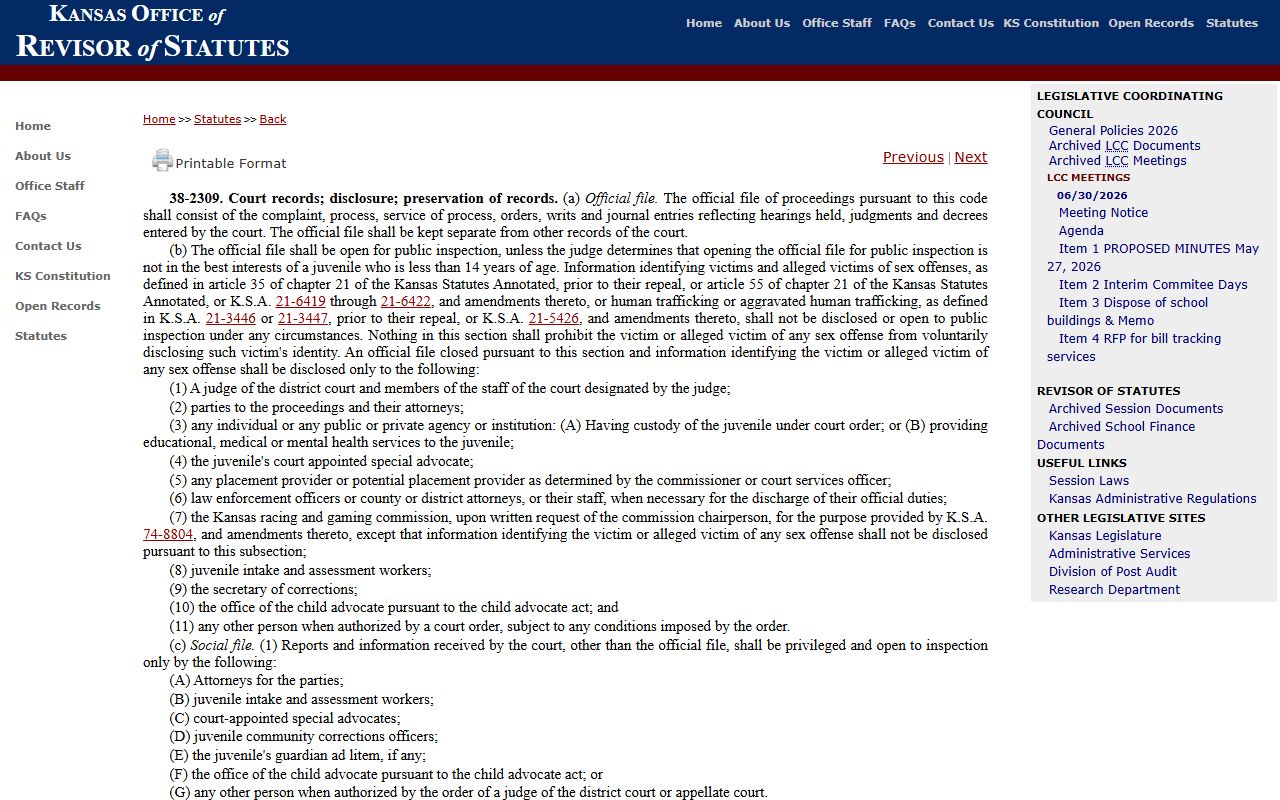
Kansas juvenile court record limits are addressed in K.S.A. 38-2309.
Haskell County Charge Status
Charge status is the key to reading court charges after arrest. A filed charge can stay pending, be amended, be reduced, be dismissed, move into diversion, or end in conviction. One arrest can produce several counts, and each count can have a different path. The docket and final journal entry should be read together because the first charge list may not match the final outcome.
| Status | What It Means | How to Read It |
|---|---|---|
| Pending | The charge has been filed and has not reached final disposition. | Check later docket entries for hearings, plea, dismissal, or trial. |
| Amended | The prosecutor or court record changed the charge, count, statute, or wording. | Compare the amended count to the original count before describing the case. |
| Reduced | The charge moved to a lesser offense, often through plea negotiation or amendment. | Read the plea and sentence entries to see the final offense. |
| Dismissed | The court or prosecutor ended the charge without a conviction on that count. | Check whether dismissal was with or without prejudice if the docket says so. |
| Diversion | The prosecutor-approved agreement may avoid conviction if completed. | KBI public history may show active diversions but excludes completed diversions. |
| Convicted | The court entered guilt by plea or verdict. | Read sentence, probation, costs, restitution, appeal, and expungement entries. |
Note: A Haskell County court charge should never be reported as a conviction without checking disposition.
Haskell County Charge Fields
A charge record can carry many of the same fields as the wider criminal case file, but the focus is narrower. It centers on the offense, statute, count, level, filing date, charging document, arresting or reporting agency if public, bond, docket activity, and final charge outcome. A Haskell County arrest record may show booking facts, while the court charge record shows the legal accusation filed with the court.
| Field | What It Shows |
|---|---|
| Defendant Name | The person charged in the district or municipal case. |
| Case Number | The court file number tied to the charge or group of charges. |
| Offense Name | The title of the alleged crime, traffic offense, or ordinance violation. |
| Statute or Ordinance | The Kansas law or city code section alleged to have been violated. |
| Count Number | The separate numbered charge within the case. |
| Severity or Class | Felony level, misdemeanor class, traffic category, or municipal offense level if public. |
| Bond or Warrant | Release terms, warrant issue, warrant recall, or failure-to-appear event when public. |
| Disposition | Pending, amended, dismissed, diverted, reduced, convicted, acquitted, or otherwise resolved. |
Haskell County Charges vs Convictions
Charges and convictions answer different questions. A charge asks what the prosecutor alleged after arrest. A conviction asks whether the court entered guilt on a count. The difference is central to Haskell County arrest records and court charges because an arrest can be followed by no charge, a dismissed charge, a diversion, or a conviction. Search results should be read through the final disposition, not the most severe first allegation.
| Point | Charge | Conviction |
|---|---|---|
| Legal Role | Formal accusation after prosecutor review. | Final finding or accepted plea of guilt. |
| Timing | Appears near the start of the case and may change. | Appears after plea, trial, or adjudication. |
| Can Change | Can be amended, reduced, dropped, dismissed, or diverted. | Can be appealed or later limited by expungement if eligible. |
| Search Risk | May be mistaken for guilt if viewed alone. | Still should be checked with sentence and expungement status. |
KBI Limits for Arrest Records
The Kansas Bureau of Investigation criminal history service is not a Haskell County arrest-record database. The research says KBI public history includes adult court convictions for Kansas felonies and misdemeanors, municipal ordinance or county resolution convictions equivalent to misdemeanors, Kansas Department of Corrections confinements, active diversions not yet completed, and arrest records within the past twelve months when disposition has not been received. It excludes arrests disposed without conviction, completed diversions, expunged records, older arrest-without-disposition records, and juvenile offender records.
That limit matters for Haskell County arrest records because a person may have an arrest event, a filed charge, a dismissed count, a diversion, or a conviction, and the KBI release may not show all of those stages. The Haskell County District Court record or municipal court record is the better source for the filed court charge and its status. KBI is the statewide criminal-history channel, not a live custody roster and not a court docket substitute.
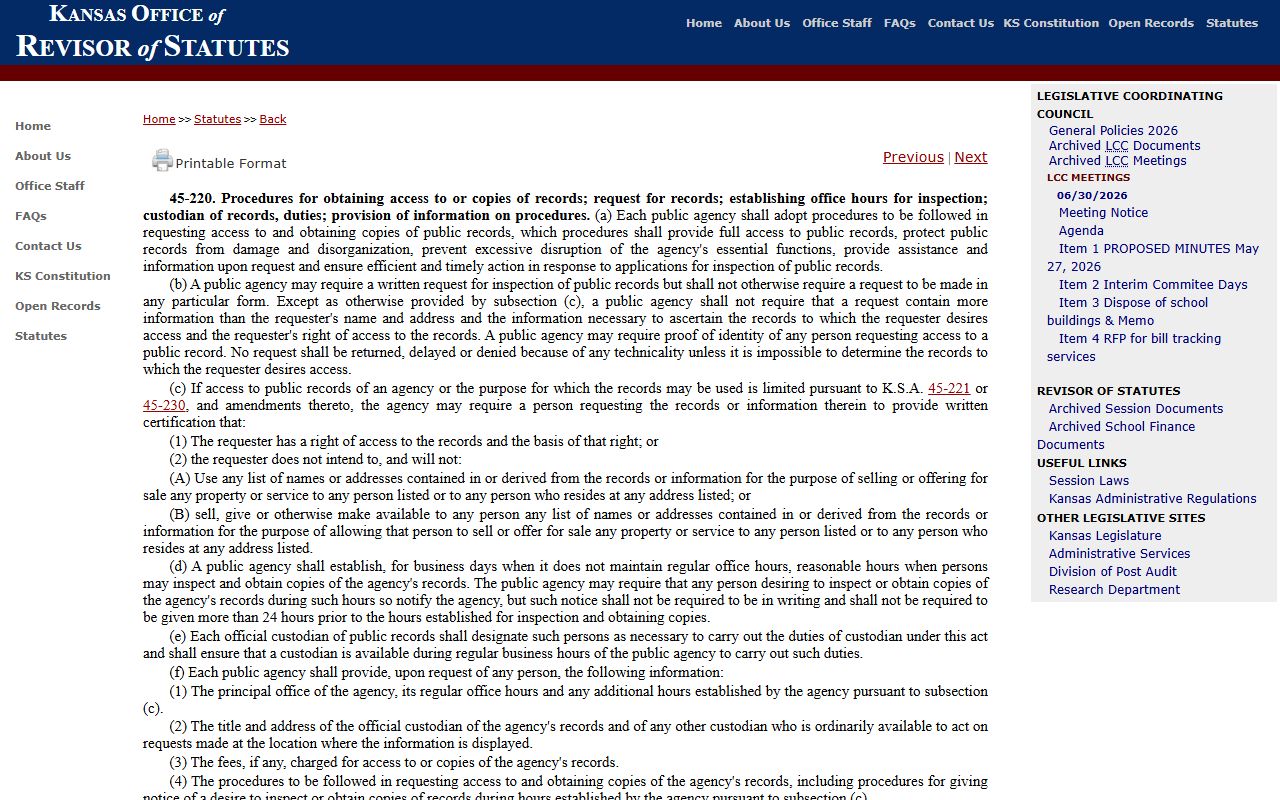
Kansas public-record procedures are addressed in K.S.A. 45-220.
Sheriff and Jail Record Context
The Haskell County Sheriff's Office is the official local contact located in the research for custody and booking questions. The Kansas Sheriffs' Association lists Sheriff Troy Briggs, PO Box 853, Sublette, KS 67877, phone 620-675-2289, and fax 620-675-2638. Physical location references place sheriff-related functions at or near the courthouse campus at 300 S Inman Street, but the sheriff directory provides the mailing address. Call before traveling or mailing anything tied to custody, booking, release, property, medication, bond, or visitation.
No official Haskell County online jail roster, mugshot database, sheriff app, Sublette Police app, or Satanta Police app was located in the official-source research. That absence should not be filled with third-party jail pages. For charge status, use Kansas CaseSearch or the proper municipal court. For current custody, call the Sheriff's Office. For state-prison custody or supervision, use KDOC KASPER, which is separate from Haskell County jail custody and should not be treated as a county arrest list.
Haskell County Sheriff's Office
PO Box 853
Sublette, KS 67877
620-675-2289
Fax: 620-675-2638
Call for current custody and booking questions.
Restricted Arrest and Charge Records
Restricted charge records include juvenile matters, sealed cases, expunged adult cases, certain domestic or protection records, care and treatment cases, and records with protected identifiers. Kansas expungement under K.S.A. 21-6614 can apply to certain convictions, arrest records, and diversions if eligibility and waiting-period rules are met. Juvenile expungement follows separate chapter 38 procedures. A sealed record and an expunged record are both restricted from ordinary public view, but they are not the same.
| Point | Sealed | Expunged |
|---|---|---|
| Access | Closed from public view by rule, statute, court order, or case type. | Public access is limited after the court grants an eligible expungement petition. |
| Record Status | The court keeps the record with access limits. | The record is treated under the expungement statute, with some authorized uses still possible. |
| Common Examples | Juvenile, adoption, care and treatment, sealed warrant, protected-party, or confidential materials. | Eligible adult arrest records, convictions, or diversion agreements after statutory requirements are met. |
| Where to Ask | The court that holds the file. | The court connected with the arrest record, conviction, or diversion. |