
Haskell County Criminal Court Files
A criminal court record is the court case file, not just a booking event. In Haskell County District Court, the file can begin with a complaint or information and then grow as the case moves through first appearance, bond, counsel appointment, preliminary hearing, arraignment, motion practice, plea, trial, disposition, sentencing, probation, restitution, and appeal notices. The Clerk of the District Court keeps the district case record for Haskell County criminal matters filed in the District Court.
Municipal courts in Sublette and Satanta handle city ordinance violations and local traffic or minor offenses inside city limits. Felony and county criminal cases belong in District Court. A municipal case can produce a city docket and fine record, while a district criminal case can produce a larger criminal court record with charges by count, prosecutor filings, judicial rulings, and sentence terms. Federal criminal cases are outside the county system and use the District of Kansas and PACER.
Search Haskell County Criminal Records
The starting point for public Haskell County criminal court records is Kansas CaseSearch. Search by case number if known. Otherwise, search by defendant name, then confirm Haskell County, case type, filing date, parties, and status before relying on the record. If a criminal case is public but not available online, contact the Haskell County Clerk of the District Court or use a courthouse terminal.
- Open Kansas CaseSearch and select the best known search field.
- Use the criminal case number if available, or search by defendant name and narrow to Haskell County.
- Open the case detail and review the docket in date order.
- Read charge entries with later plea, dismissal, disposition, and sentencing entries.
- Request a certified copy from the Clerk of the District Court when a court-stamped document is needed.
KBI criminal history is a separate statewide record check. It may be useful for adult Kansas conviction history, active diversions, recent arrest-without-disposition entries, and KDOC confinement information, but it does not replace the Haskell County criminal court case file.
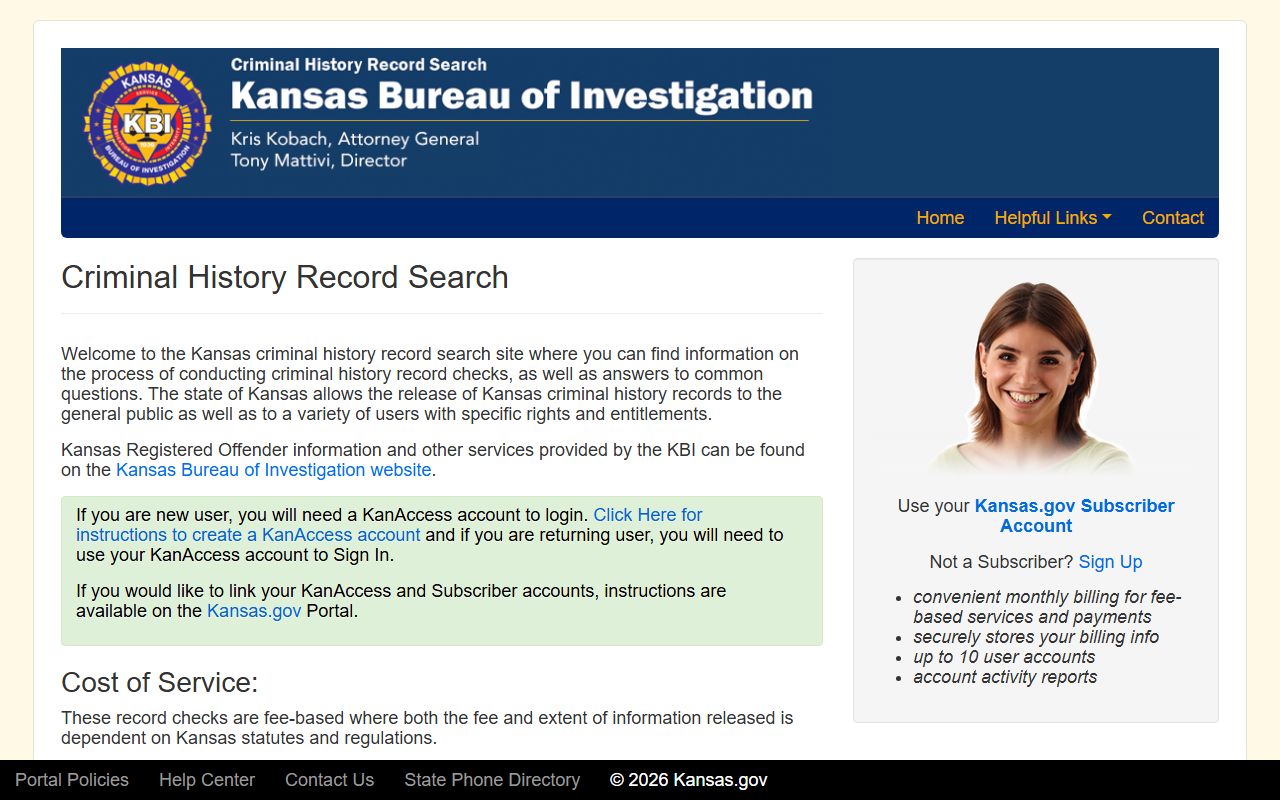
The KBI criminal history search portal is the statewide public-history source.
Haskell County Criminal Case Flow
Criminal court records are easiest to read as a process. A charge entry near the start of a case is an allegation. Later entries show whether the charge was amended, dismissed, diverted, tried, pleaded, or sentenced. One case may have several counts, and each count can have a different outcome. That is why the docket and final journal entry matter as much as the first charging document.
Case flow: Charges Filed › First Appearance › Arraignment › Pretrial and Motions › Plea or Trial › Disposition › Sentencing
| Stage | What Happens |
|---|---|
| Charges Filed | The County Attorney or prosecutor files a complaint or information that opens the criminal case record. |
| First Appearance | The court addresses notice of the charge, bond, release conditions, and counsel issues. |
| Arraignment | The defendant answers the charges with a plea, such as guilty, no contest, or not guilty. |
| Pretrial and Motions | Parties file motions, set hearings, address evidence, continue dates, or negotiate plea and diversion terms. |
| Plea or Trial | The case resolves by plea, trial verdict, dismissal, diversion, or another disposition. |
| Sentencing | The court enters sentence terms, costs, restitution, probation, confinement, or other ordered conditions when applicable. |
The Kansas State Board of Indigents' Defense Services describes appointed counsel through BIDS, because appointed counsel can be part of the criminal case process.

What Haskell County Criminal Records Show
A Haskell County criminal court record may show the defendant, case number, prosecutor, defense counsel, charges, count numbers, statute references, severity levels, bond, warrants, court dates, pleas, motions, journal entries, disposition by count, sentence, probation, restitution, fines, costs, and payments. It can also show what is not final. Pending charges, dismissed counts, amended charges, and diversion entries must be read carefully so they are not mistaken for convictions.
| Field | What It Shows |
|---|---|
| Case Number | The Haskell County District Court criminal case identifier, often including year, case type, and sequence. |
| Defendant | The person charged in the criminal case, along with public party details allowed by court rules. |
| Charges | Offense names, statutes, count numbers, severity or class, amended counts, dismissed counts, and charge dates where public. |
| Bond and Warrants | Release conditions, bond settings, warrant issue or recall entries, and failure-to-appear actions when public. |
| Plea and Motions | Not-guilty, guilty, no-contest, diversion-related actions, suppression motions, continuances, and other court events. |
| Disposition | Outcome by case or count, including conviction, dismissal, diversion, acquittal, or other result. |
| Sentence | Confinement, probation, postrelease, fines, costs, restitution, treatment, or other ordered conditions when applicable. |
| Redactions | Protected identifiers, sealed attachments, victim details, juvenile data, medical details, and confidential addresses may be withheld. |
For the arrest-to-charge pathway before the full case outcome, see Haskell County arrest records and court charges.
Haskell County Charges vs Convictions
A charge is an accusation filed in court. A conviction is an outcome after a guilty plea, no-contest plea accepted by the court, or guilty verdict. Haskell County criminal court records can show both, and they can also show charges that were reduced, amended, dismissed, diverted, or ended in acquittal. Each count should be checked against its final disposition.
| Point | Charge | Conviction |
|---|---|---|
| Meaning | An allegation filed by the prosecutor or stated in a complaint. | A court outcome based on plea or verdict. |
| Timing | Appears early in the case and may change. | Appears after plea, trial, or other final adjudication. |
| Record Risk | Can be mistaken for guilt if read without the disposition. | Should be read with sentence, probation, appeal, and expungement status. |
| KBI Treatment | Recent arrest-without-disposition entries may appear for a limited time. | Adult Kansas felony and misdemeanor convictions may appear in public criminal history if not excluded. |
KBI and Haskell County Criminal Records
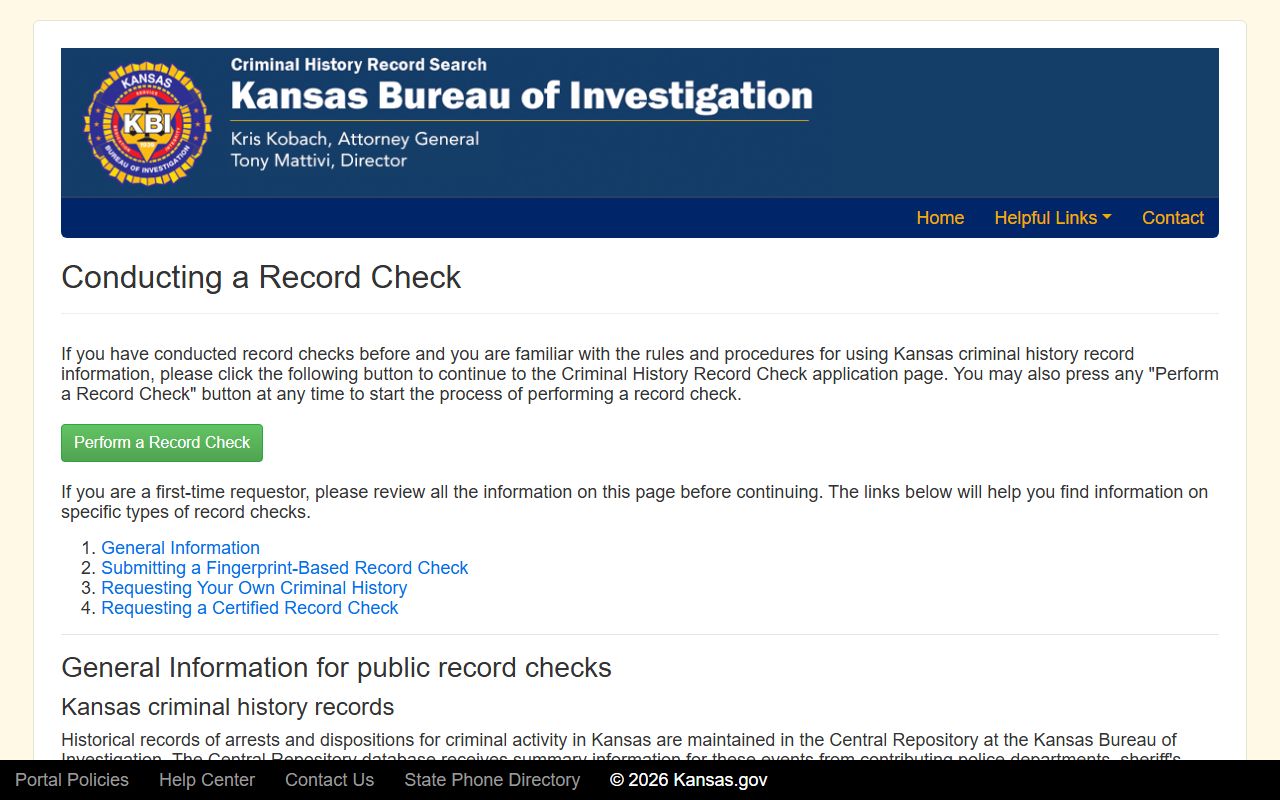
The KBI conducting record check instructions explain the statewide criminal-history channel. Public KBI checks include adult Kansas felony and misdemeanor convictions, municipal ordinance or county resolution convictions equivalent to misdemeanors, KDOC confinements, active diversions not yet completed, and arrest records within the past twelve months if disposition has not been received. Name-based checks, fingerprint checks, and certified checks have different fees and requirements.
KBI public history excludes arrests disposed without conviction, completed diversions, expunged arrests, prosecutions, convictions, and confinements, arrest records older than twelve months without disposition, and juvenile offender records. That means KBI can be useful for a statewide snapshot, but it cannot prove the full contents of a Haskell County criminal case file. A court record may show more case detail, while KBI may show a different statewide release-limited view.
KBI explains public-history rules in its conducting a record check instructions.
Sealed and Expunged Criminal Records
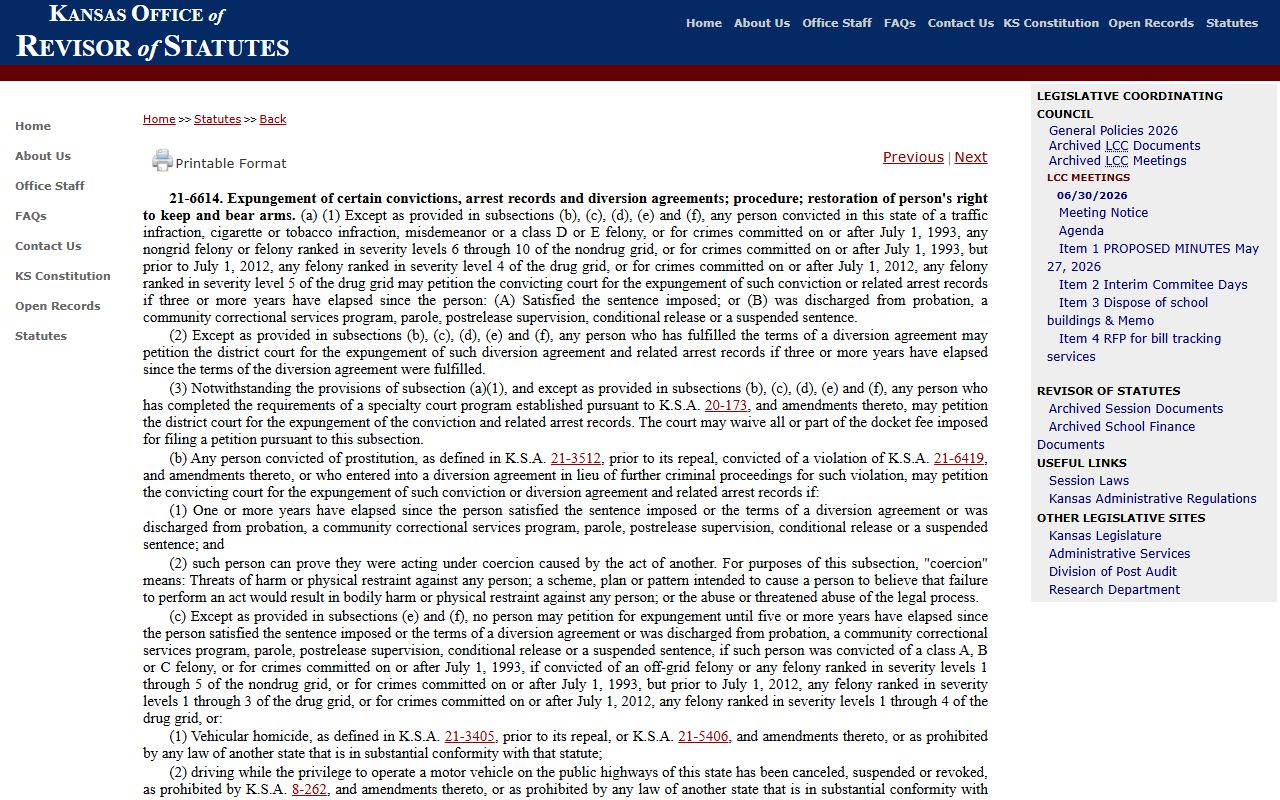
Restricted Haskell County criminal court records include juvenile records, sealed cases, expunged records, confidential identifiers, and records closed by rule, statute, or court order. Kansas expungement is filed in the court tied to the conviction, arrest record, or diversion. K.S.A. 21-6614 covers expungement of certain adult convictions, arrest records, and diversion agreements, with waiting periods and exclusions that depend on the offense and case outcome.
| Point | Sealed | Expunged |
|---|---|---|
| Public Visibility | Closed from public access by rule, statute, order, or case type. | Public access is limited by an expungement order if the petition is granted. |
| Record Existence | The court keeps the record, but access is restricted. | Expungement does not always destroy every record and may leave limited authorized access. |
| Common Source | Juvenile, adoption, sealed warrant material, protection, care and treatment, or sensitive filings. | Eligible adult convictions, arrests, or diversions under Kansas expungement law. |
| Where to Ask | Clerk of the District Court or the issuing court. | The court connected with the conviction, arrest record, or diversion. |
K.S.A. 21-6614 is the adult expungement source for eligible Kansas records.
Public Criminal Court Access
Public access to Haskell County criminal court records is shaped by Kansas open-records statutes, court rules, and case-specific restrictions. K.S.A. 45-216 states the broad public policy favoring open inspection unless law provides otherwise. K.S.A. 45-218 covers inspection requests. K.S.A. 45-219 allows fees tied to copies and access costs. K.S.A. 45-221 lists records not required to be disclosed and supports separating open and closed information when possible.
Note: A criminal court record should be read with the final disposition, not just the first charge entry.
Juvenile offender records are not released through general KBI public criminal history, and Kansas chapter 38 contains juvenile confidentiality and expungement provisions. Protection matters, care and treatment cases, sealed warrants, and documents with protected identifiers may also be limited. If a public Haskell County criminal court record is not online, the Clerk of the District Court is the local fallback for terminal access or copy-request guidance.